

The themes of this conference propose discussion on ‘the ways in which we contextualise and process the past and issues inequality and iniquity and today’s rise in nationalism.’ All of these issues arise inevitably when we examine the history of Paris couture in WW2. In the midst of traumatic upheavals of World War Two, a text with such a focus - still a contentious issue - might seem perverse and my long commitment to examining this topic will be explained.
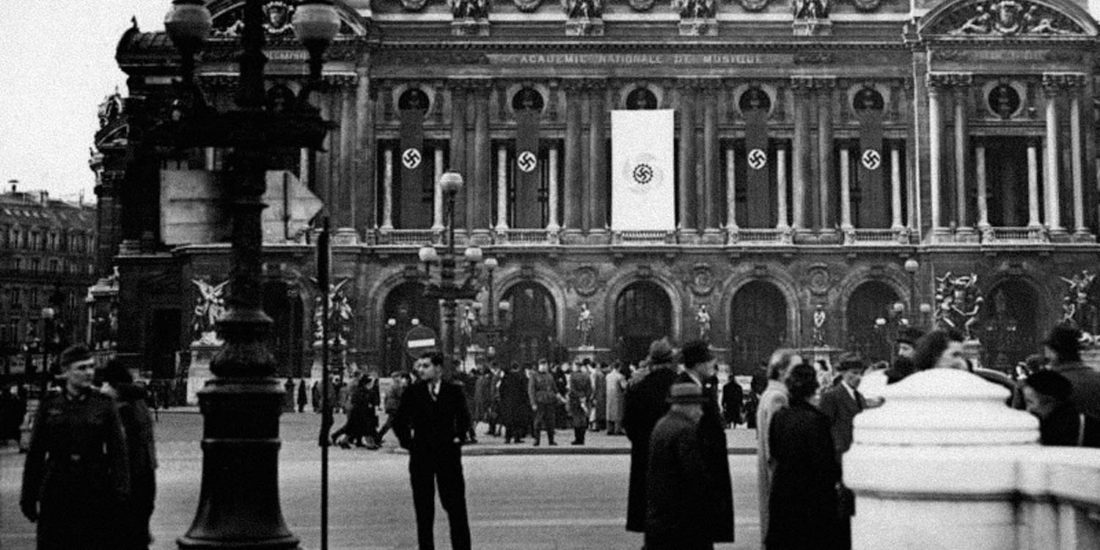
French couture fashion leading up to WW2 was an unrivalled, lucrative, international business, the jewel the crown of French culture. Once Paris was occupied from June 1940 and France divided, Otto Abbetz, the ‘German Ambassador’ in Paris, a keen Nazi, immediately activated Goebells’ Propaganda-Staffel policies for the establishment of Franco-German ‘cultural collaboration’. This was based on the premise that an active continuation of French intellectual life, re-aligned on a Nazi axis, would enhance the illusion that a ‘normal life’ was continuing in Paris -despite the deportation of Jews, the torturing of Resistants in the cellars of the Hotel de Ville, the looting of art collections and forced labour schemes. Hence the luxury high society life of the Tout Paris collaborating circles. Hence too the continuation of the work of Paris couture which can now be seen as a highly successful example of Nazi ‘cultural collaboration,’ despite the wishes of most of the couturiers. The trade could have been shut down in an instant but with their ‘ruthless sense of national and personal entitlement to own everything in their path‘ (Kershaw 1999:240) the Nazi authorities permitted its continuation.
This presentation will examine style development and making under conditions of extreme shortages, the consumers and resistors at home and in Allied and Occupied countries and the fate of Jewish fashion industry professionals in France, and all over Europe.
